India's No.1 Automation System For Your Health Care Growth



You finally got the lead.
Someone saw your Meta Ad, clicked on your landing page, filled out the form and shared their name and phone number. Your campaign dashboard shows another conversion. The numbers look good.
But then something happens.
The lead waits.
Maybe someone from your team calls after a few hours. Maybe they send a WhatsApp message the next day. Maybe the lead gets added to a Google Sheet and someone is supposed to follow up later.
And sometimes, nothing happens at all.
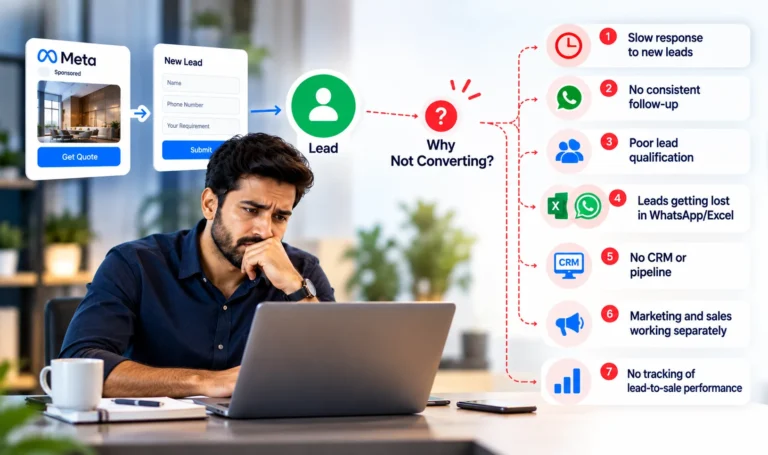
A few days later, the same business owner looks at the advertising report and wonders, “We are getting leads, but why aren’t we getting enough sales?”
This is one of the biggest gaps we see in digital marketing today.
Businesses have become very good at generating leads. They know how to run Meta Ads, Google Ads, create landing pages and attract people who are interested in their products or services. But generating the lead is only the first step.
The real question is: What happens after the lead comes in?
A Lead Is Not a Sale
Getting someone’s contact information doesn’t mean you’ve won their business.
A person who fills out your form may be interested, but they may also be comparing different companies, checking prices, researching their options or simply trying to understand whether your service is right for them.
This is especially true for businesses where the buying decision takes time.
Think about someone looking for a home construction company. They may submit enquiries to three or four contractors. Someone looking for an interior designer might speak with multiple firms before making a decision. A business owner searching for a service may contact several providers before deciding who to trust.
So when that enquiry reaches your business, you are not at the end of the marketing journey.
You’re at the beginning of the sales journey.
And this is where many businesses start losing opportunities.
What Happens in the First Few Minutes?
Imagine that a potential customer has just submitted an enquiry.
At that moment, they are actively thinking about your business. They may still be looking at your website, comparing your service or waiting for someone to contact them.
Now imagine two different businesses.
The first business sends an immediate confirmation, starts a WhatsApp conversation and alerts the sales team. A salesperson contacts the prospect quickly, understands their requirement and schedules a consultation.
The second business collects the lead in a spreadsheet. The salesperson notices it later in the day, calls once and doesn’t get an answer. There is no reminder, no structured follow-up and no clear process for what happens next.
Both businesses generated a lead.
But they created completely different experiences.
The difference isn’t the lead. It’s the system behind the lead.
Speed Is Important, But Consistency Is More Important
Responding quickly matters, but speed alone doesn’t solve the problem.
What happens when the prospect doesn’t answer your first call?
Do you try again?
When should you follow up?
What message should you send?
What happens after the second follow-up?
What if the prospect says, “I’ll get back to you”?
Without a defined process, every salesperson handles the situation differently. One person may follow up twice. Another may forget. Someone else may continue calling without understanding whether the prospect is actually qualified.
This creates an inconsistent customer experience.
A proper lead-to-sale system gives your team a structured process to follow. New leads can be acknowledged immediately, assigned to the right person, qualified based on your business requirements and moved through a defined follow-up journey.
The objective isn’t to bombard people with messages.
The objective is to make sure genuine opportunities don’t disappear simply because someone forgot to follow up.
Follow-Up Is Where the Money Often Is
Not every customer is ready to buy today.
Someone might be interested in your service but need to discuss it with their partner. Another person might need to arrange their budget. Someone else may be comparing your proposal with another company.
If your sales process only focuses on people who are ready to buy immediately, you are going to lose a large number of potential customers.
This is why follow-up matters.
A good follow-up system keeps your business connected with prospects without depending entirely on someone’s memory. It can remind salespeople when to call, trigger appropriate WhatsApp messages, send useful information and move prospects through different stages of the sales process.
Over time, this creates something extremely valuable:
Consistency.
And consistency is difficult to achieve when your entire sales process lives inside people’s heads.
But Should Everything Be Automated?
No.
This is an important distinction.
Automation should not mean replacing your sales team with robots.
People still want to speak to people, especially when they’re making an important purchase. A customer may want to discuss their project, understand pricing, ask questions or build trust before making a decision.
The role of automation is to remove unnecessary manual work around those conversations.
An automated system can acknowledge a new enquiry, collect basic information, remind the salesperson about a follow-up and help schedule an appointment.
Your sales team can then focus on what humans do best: understanding the customer, building trust, handling objections and closing the opportunity.
Technology should support the sales team, not make the customer feel like they’re talking to a machine at every stage.
Not Every Lead Deserves the Same Attention
Another common problem is treating every enquiry exactly the same.
Imagine a construction company receiving 100 enquiries in a month. Some people may be ready to start construction within the next 30 days. Others may still be researching. Some may have no realistic budget. Others may not even be located in the company’s service area.
If the sales team treats all 100 enquiries equally, valuable time can be wasted.
This is where lead qualification becomes important.
The system should help your team understand which opportunities are worth prioritizing. Depending on the business, qualification could involve budget, location, requirement, timeline, project size or other factors.
The goal isn’t to reject people.
The goal is to help your sales team spend more time on the opportunities where they can create the most value.
Your CRM Should Tell You What Is Happening
Many businesses technically have leads, but they don’t really know what is happening with them.
Ask a simple question:
“How many leads did we generate last month, and how many are currently being followed up?”
If the answer requires someone to open multiple spreadsheets, search WhatsApp conversations and call different salespeople, there is a visibility problem.
A CRM can change that.
Instead of treating leads as a list of phone numbers, you can treat them as opportunities moving through a process.
You can see where a prospect came from, who is handling them, what stage they’re currently in, when they need to be contacted again and whether they’ve eventually become a customer.
Suddenly, marketing and sales have something they can both understand.
A common view of the customer journey.
Marketing Should Know What Happens to Its Leads
This is another major disconnect.
Marketing teams often celebrate the number of leads generated. Sales teams often complain about the quality of those leads.
Both sides may believe they’re doing their job.
But neither side has the complete picture.
Suppose a campaign generates 200 enquiries. On the surface, that looks successful.
But what if only 20 were qualified?
And what if only five eventually became customers?
Now the question changes.
Instead of asking, “How many leads did our campaign generate?”, you can start asking better questions.
Which campaign generated the best opportunities? Which leads became appointments? Which sources generated customers? Where are prospects dropping out? How long does it take to convert a lead? Which follow-up process produces better results?
These questions allow you to optimize the entire customer journey instead of optimizing only the advertising campaign.
The Lead-to-Sale Journey
A strong growth system connects every stage of the journey.
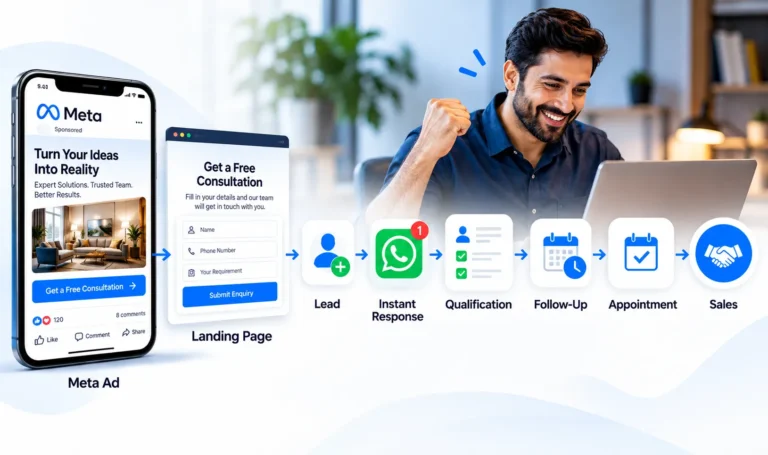
A prospect first discovers your business through an advertisement, search result, social media post or referral. They visit your website or landing page and make an enquiry. That enquiry enters your system, where it can be acknowledged and assigned to the appropriate person.
The prospect is then contacted, qualified and followed up with. If there is genuine interest, the next step could be a consultation, meeting, demo, site visit or appointment.
From there, your sales team takes over the conversation and works toward closing the opportunity.
The journey looks simple when written down:
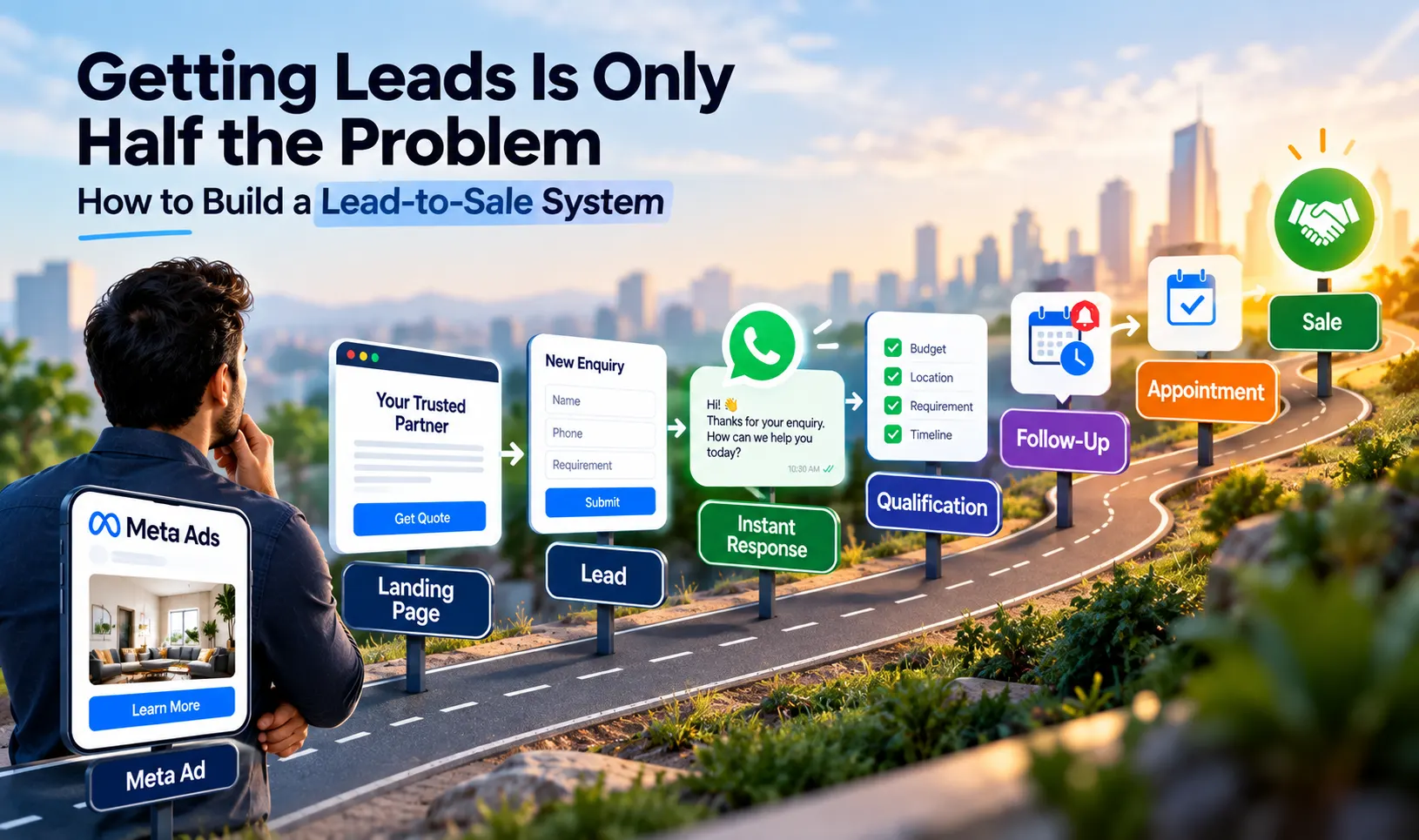
Traffic → Lead → Response → Qualification → Follow-Up → Appointment → Sale
But the important part isn’t the arrows.
It’s what happens between them.
That’s where systems, people, processes and technology come together.
Your Marketing Doesn’t End When Someone Fills Out a Form
This is perhaps the biggest mindset shift businesses need to make.
A form submission is not the destination of your marketing campaign.
It is the beginning of a relationship.
If you spend money attracting someone to your business and then fail to respond, qualify or follow up properly, increasing your advertising budget may not solve the real problem.
You may simply generate more leads that your existing system isn’t capable of handling.
Before asking, “How can we generate more leads?”, it is worth asking:
“Can our business consistently handle the leads we are already generating?”
If the answer is no, fixing the system may create more growth than simply increasing your ad spend.
Build a System That Works Beyond One Person
A good sales process shouldn’t collapse when one salesperson is busy, takes a holiday or leaves the company.
The knowledge and process should live within the business.
Your CRM should show what is happening. Your automation should handle repetitive tasks. Your sales process should define what happens next. Your team should know who is responsible for each opportunity.
That’s how you start building a business that can scale.
Not by adding more people to a broken process.
But by creating a better process first.
The Future of Digital Marketing Is Connected
Digital marketing is no longer just about running advertisements.
Businesses now have access to websites, landing pages, CRM platforms, WhatsApp, AI, automation, analytics and countless other technologies.
The challenge isn’t having access to these tools.
The challenge is connecting them properly.
Your advertisement should connect to your landing page. Your landing page should connect to your CRM. Your CRM should connect to your follow-up process. Your follow-up should lead to an appointment. Your sales team should have the information they need to close the opportunity.
When these pieces work separately, you have a collection of tools.
When they work together, you have a system.
From Lead Generation to Lead Conversion
At ARS Digital, we believe digital marketing should go beyond generating enquiries.
Our approach is to connect marketing, funnels, CRM, automation, AI and sales processes so businesses can create a smoother journey from the first interaction to the sales conversation.
Because getting a lead is only half the problem.
The real opportunity lies in what you do with that lead next.
If your business is generating enquiries but struggling to consistently follow up, qualify and convert them, you may not need more leads yet.
You may need a better system.
Build Your Lead-to-Sale System with ARS Digital
Let’s look at your current marketing and sales journey, identify where opportunities are being lost, and build a system that helps your business generate, manage and convert leads more effectively